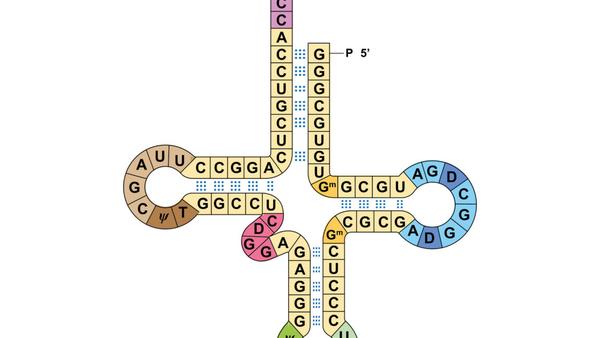
With these charged alternative transfer RNAs in hand, the researchers confirmed that they were ignored by normal ribosomes. But if you used a ribosome with the corresponding changes that restored base pairing, it would happily make a protein using them. So, the researchers had two different populations of transfer RNAs, each compatible with a different population of ribosomes. They designed a separate genetic code and used the alternative transfer RNAs to implement it. They then designed a messenger RNA that could be translated by both genetic codes, but would produce different proteins depending on which code was being used. They then put together a mixture of both populations of transfer RNAs, both populations of ribosomes, and all the chemicals needed to get translation to work